QuickBooks Desktop Update Loop Issue: Causes & Solution

My name is Rayo Martin. I work with BizBooks Advice to deliver tailored solutions for your software-related challenges. We also offer expert accounting services, including bookkeeping, cash flow management, financial reporting, and payroll management.
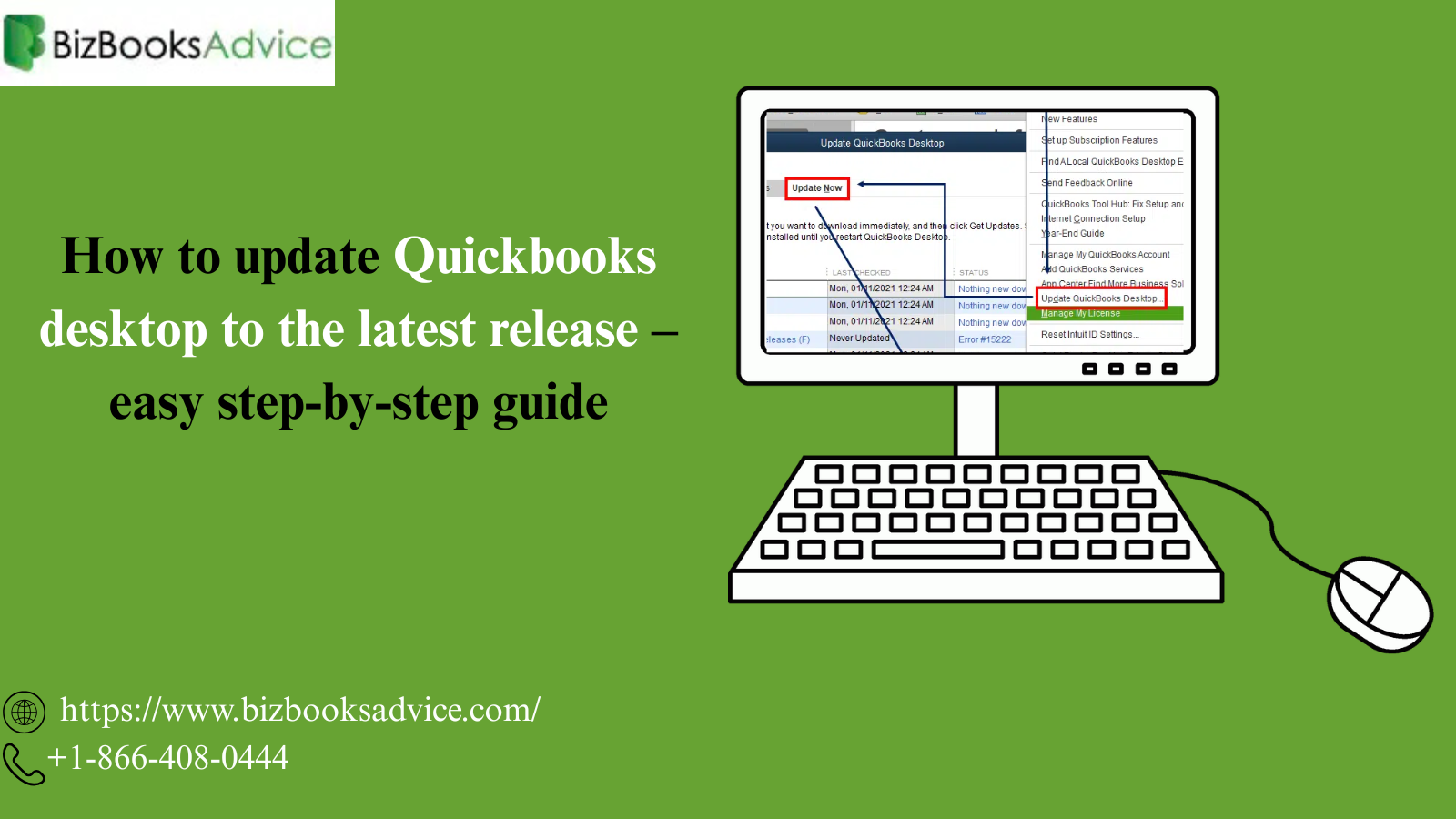
In today’s fast-paced business environment, smooth financial software updates are essential. However, users of QuickBooks Desktop often encounter a frustrating problem – the QuickBooks Desktop Update Loop Issue. This recurring cycle of update failures interferes with daily operations, leading to downtime and lost productivity. At BizBookAdvice, we delve deep into this prevalent issue, offering comprehensive guidance, troubleshooting tips, and prevention strategies to help you navigate this challenge effectively.
Understanding the QuickBooks Desktop Update Loop Issue
When you initiate an update for QuickBooks Desktop, it should typically download the latest changes and install them seamlessly. Unfortunately, many users encounter the QuickBooks Desktop Update Loop Issue, where the update restarts repeatedly without completing. You’ll often see error messages such as “Update did not finish” or your system reverts to an older version after restarting.
What Exactly Is the Update Loop?
Continuous Update Cycle – QuickBooks initiates the update but fails to finalize it, then continues restarting the update process.
Version Mismatch – The application shows conflicting software versions, signaling that the intended update did not register.
Recurring Prompts – Users are repeatedly prompted to update QuickBooks Desktop, even after multiple attempts.
Why It Matters for Small Business Owners
Facing the QuickBooks Desktop Update Loop Issue can trigger a cascade of business disruptions:
Interrupted Workflow – Repeated update failures halt vital tasks like invoicing, payroll, and expense tracking.
Data Vulnerabilities – Without the latest patches, your accounting data may be exposed to security risks.
Increased IT Overhead – Troubleshooting the update loop consumes valuable time and resources.
Compliance Risks – Updates frequently include adjustments for tax law changes—missing them can lead to non-compliance.
Core Causes of the Update Loop Issue
To resolve the QuickBooks Desktop Update Loop Issue, it is essential to identify its primary triggers. Based on extensive user reports and support insights, here are the most common causes:
1. Corrupted Update Cache
QuickBooks stores update files in a local cache. If these files become corrupted or incomplete, the update will fail and often restart perpetually.
2. Damaged Installation Files
Missing or corrupted core QuickBooks components—such as QBWUSER.INI or QBUpdate.exe—can prevent the update from executing properly.
3. Inadequate Folder Permissions
QuickBooks needs proper access to folders like Program Files, Common Files, and AppData. Restricted permissions can block file write operations.
4. Conflicting Security Software
Antivirus or firewall applications may interpret QuickBooks update actions as suspicious and either block or quarantine essential files.
5. Incomplete Windows Updates
Because QuickBooks relies on specific Windows libraries, missing or incomplete Windows updates may cause incompatibilities that lead to the update loop.
Step‑by‑Step Fixes for the Update Loop Issue
Tackling the QuickBooks Desktop Update Loop Issue typically involves a series of systematic repairs. Here’s a professional troubleshooting guide:
Step 1 – Clear the Update Cache
Close QuickBooks Desktop and all open windows.
Navigate to your update cache directory—usually located at:
makefileCopyEditC:\ProgramData\Intuit\QuickBooks <year>\ComponentsDelete all contents within the Components folder. Keep a backup if needed.
Restart QuickBooks and download the updates again.
Why this helps: Removing corrupted files forces QuickBooks to fetch clean, fresh copies.
Step 2 – Run QuickBooks Install Diagnostic Tool
Download and run the QuickBooks Install Diagnostic Tool from Intuit’s support site.
Allow it to scan and repair registry entries, .NET Framework, and MSXML components.
After completion, restart the system and attempt the update again.
Why it’s effective: This tool often identifies hidden issues with installation components that cause update failures.
Step 3 – Repair QuickBooks Desktop
Open Control Panel → Programs → Programs & Features.
Select QuickBooks Desktop and click Uninstall/Change.
Choose Repair and follow the on-screen prompts.
Reboot and re-initiate the update.
Why it matters: Repairing reinstalls essential program files without affecting your company data.
Step 4 – Set Correct Folder Permissions
Right‑click on the QuickBooks installation folder—typically C:\Program Files\Intuit—and select Properties.
Under the Security tab, ensure that the current user and SYSTEM have Full Control.
Apply similar permissions to AppData\Local\Temp and company data folders (.QBW).
Retry the update in QuickBooks Desktop.
Why it’s necessary: Ensuring write access prevents permission issues that interrupt updates.
Step 5 – Temporarily Disable Security Software
Temporarily turn off antivirus, firewall, and anti-malware software.
Perform the QuickBooks update.
Once the update completes successfully, re-enable your security suite.
Why this works: Lunatic anti-virus settings often block update-related file changes. Disabling them helps ensure a clean update cycle.
Step 6 – Apply Windows Updates
Open Settings → Update & Security → Windows Update.
Click Check for updates and install all available patches. Restart the system.
Perform the QuickBooks update again.
Why it resolves the issue: QuickBooks depends on certain Microsoft libraries; having the latest Windows updates ensures compatibility.
Advanced Resolutions
If the QuickBooks Desktop Update Loop Issue persists after standard fixes, explore these advanced options:
Create a New Windows Admin User
Navigate to Settings → Accounts → Family & other users → Add someone else to this PC.
Create a user with Administrator privileges.
Log into this new account and retry the QuickBooks update.
Why it may help: User profile corruption can sometimes impede updates; a fresh admin user ensures a clean environment.
Perform a Clean Install of QuickBooks Desktop
Back up all QuickBooks company data and license credentials.
Use the QuickBooks Clean Install Tool (via Install Diagnostic Tool) to uninstall fully.
Delete leftover folders in Program Files, ProgramData, and AppData (make backups).
Reinstall QuickBooks Desktop and apply updates anew.
Why it works: A clean install removes deeply rooted corruption in installation files that ordinary repairs miss.
Use QuickBooks Tool Hub
Download the QuickBooks Tool Hub from Intuit’s official site.
Run the Program Problems tool inside the hub—particularly the “Quick Fix my Program” option.
Once the fix completes, launch QuickBooks from the tool hub and update.
Why it’s reliable: Tool Hub automates and sequences many behind-the-scenes repairs.
Preventing the Update Loop Issue
Long-term prevention of the QuickBooks Desktop Update Loop Issue involves proactive practices:
Keep QuickBooks updated regularly—don’t skip multiple versions.
Routinely run the Install Diagnostic Tool, especially after Windows updates.
Maintain antivirus exceptions for QuickBooks executables and update folders.
Perform monthly Windows Updates to keep system dependencies current.
Schedule regular backups before any updates; restore quickly if needed.
When to Contact Support
If you’ve exhausted self-troubleshooting without success, it may be time to contact a QuickBooks Desktop expert:
Problems persist despite full clean install and update checks.
Critical business operations remain blocked—payroll, invoicing, etc.
You lack internal IT expertise for advanced Windows or registry-level fixes.
BizBookAdvice partners with certified QuickBooks professionals. Our team offers remote diagnostics and tailored support to resolve your update loop definitively—ensuring your financial software remains reliable and secure.
FAQ
1. What exactly causes the QuickBooks Desktop Update Loop Issue?
The most common causes include corrupted update cache, damaged installation files, permission restrictions, antivirus/firewall interruptions, and incomplete Windows updates. Each of these can disrupt QuickBooks’ ability to finalize the update process.
2. Can I fix the update loop without reinstalling QuickBooks?
Absolutely. Most users resolve the problem by clearing the update cache, running the Install Diagnostic Tool, repairing the installation, adjusting folder permissions, and temporarily disabling antivirus software. Clean reinstalling is a last resort for persistent issues.
3. How do I prevent the update loop from happening again?
Set QuickBooks to auto-update, run Windows Updates and Diagnostics monthly, maintain antivirus exceptions, and regularly back up your data. These proactive steps ensure smoother future updates and reduce the likelihood of recurring loops.
Final Thoughts
The QuickBooks Desktop Update Loop Issue can weaken your bookkeeping workflow, but it’s highly solvable with structured troubleshooting. BizBookAdvice recommends a layered repair strategy: clear corruption, repair components, fix permissions, and ensure system compatibility.
By combining these actions with proactive maintenance and expert support when needed, your organization can maintain uninterrupted access to essential QuickBooks updates — securing both efficiency and compliance.
For deep-dive remote assistance and customized guidance tailored to your setup, reach out to BizBookAdvice. We specialize in QuickBooks support that empowers your financial software to consistently perform at its best.